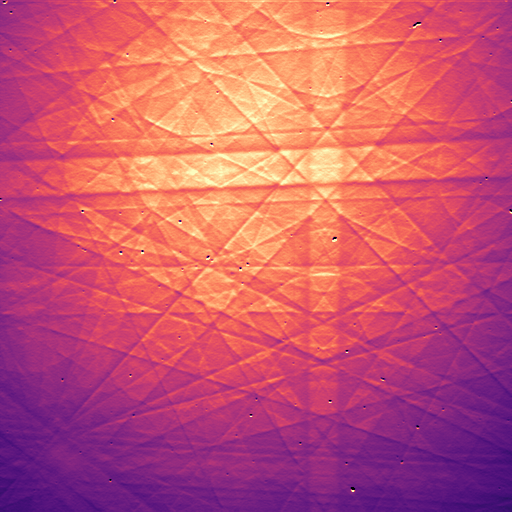
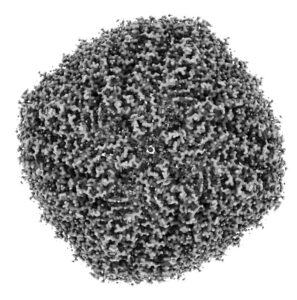
Catch up with Direct Electron at IMC21 Direct Electron Applications Scientist Dr. Barnaby Levin will be presenting three contributions highlighting advances in direct detection and new approaches to data collection across several microscopy applications: Advances in MAPS Direct Detector Technology for EBSD, TKD, LEEM and PEEMMonday, August 31 | Surface Sensitive Microscopy, Analysis and Sample Manipulation | 10:35 AM–12:20 PM A Rapid Electron Counting Detector and GPU Powered Software for In Situ TEMTuesday, September 1 | Poster Session 2 | 5:30–6:30 PM Accelerating In Situ 4D STEM by Combining Custom Scan Patterns and Hardware Drift CorrectionWednesday, September 2 | Innovating Microscopy End-to-End: Hardware, Automation, and AI in Honour of Albert Crewe | 1:40–3:25 PM Direct Electron Cameras in Research at IMC21 We’re also excited to see work from researchers using Direct Electron cameras represented throughout the IMC21 scientific program. Prof. David Bhella, Professor of Structural Virology and Director of the Scottish Centre for Macromolecular Imaging at the University of Glasgow, will present “Frozen in Time: Cryo-EM Reveals Both Conserved and Novel Structural Features in a Divergent Herpesvirus Lineage,” featuring work with the Apollo direct electron detector, during the Cryo-EM session on Tuesday, September 1. Additional work from Bhella and colleagues will be presented during Wednesday’s poster session, including “Revealing the Native Architecture of RSV Replication Complexes Through In-Situ Structural Biology” and “Conformational Analysis of the Measles Virus Nucleocapsid Using Cryo-EM and Molecular Dynamics.” Researchers from the Max Planck Institute will also present several contributions featuring work with the DE-16, spanning ultrafast electron microscopy and diffraction: Steady-State Operando Imaging and Laser-Driven Megahertz Cycling of Ultrafast Charge-Density Wave Phase Transitions — Till Domröse Ultrafast Nanobeam Electron Diffraction of Structural Phase Transformations in 2D Materials — Sophie F. Schaible Stimulated Inelastic Electron Holography — Tim Dauwe Ultrafast Electron Microscopy and Free-Electron Quantum Optics — Claus Ropers, invited presentation We’re proud to see Direct Electron technology supporting such a diverse range of microscopy research and look forward to hearing the results in Liverpool. Going to IMC21? Stop by Booth 253 and say hello. We look forward to seeing you there!